Why Is This Taking So Long?
When Waiting Starts to Feel Heavy
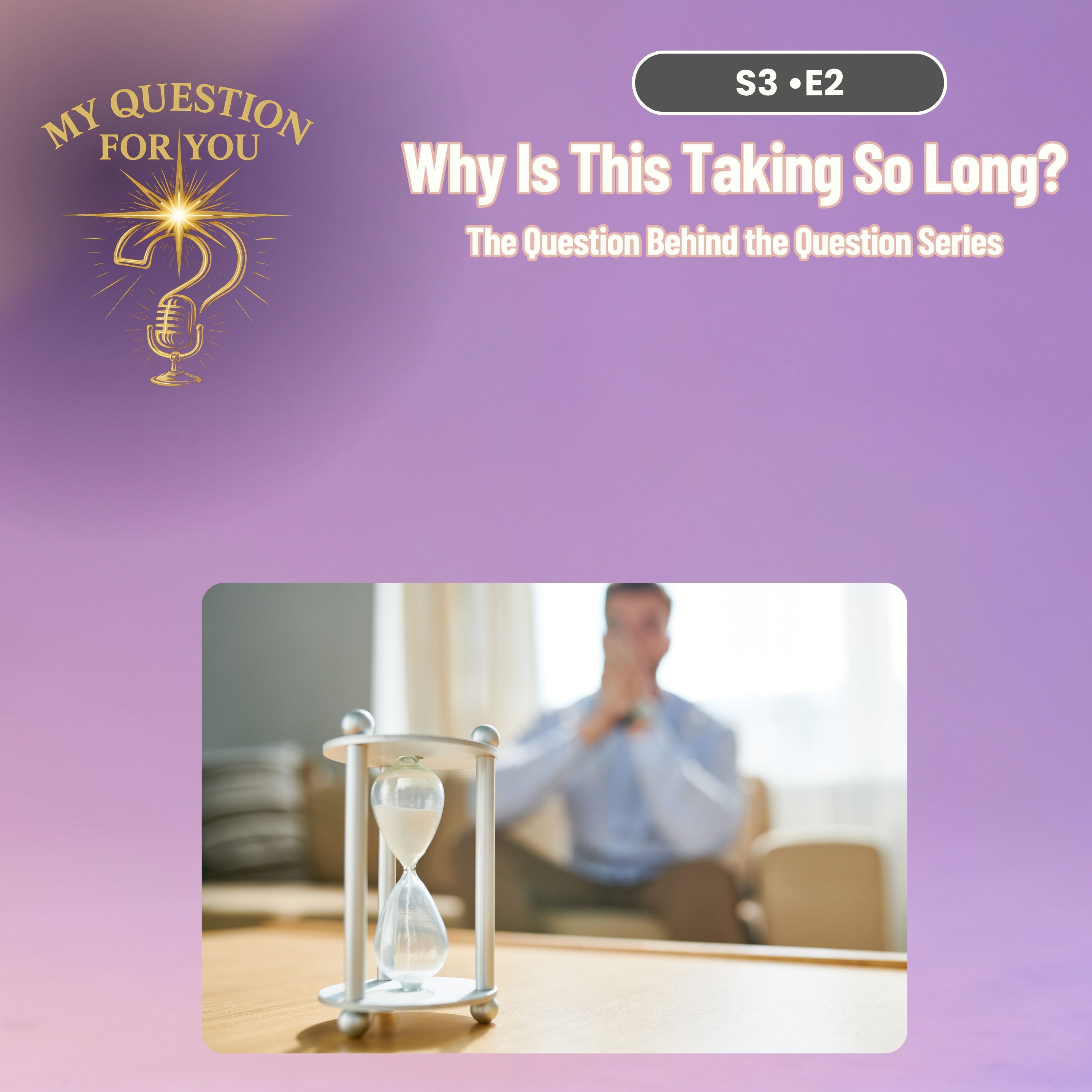
There is a kind of waiting that slowly wears on you.
Not the kind where you expect an answer soon, but the kind where time stretches beyond what you anticipated. The kind where you find yourself checking less often, not because you have peace, but because you’re tired of hoping something might have changed.
You still pray. You still believe. But over time, the question begins to shift. What started as curiosity becomes something heavier and more personal:
Why is this taking so long?
It’s an honest question. And if you’ve been in that space, you know it’s rarely just about time. It’s about what the waiting begins to do to your trust.
When Waiting Starts to Change the Questions
Waiting has a way of filling the silence, but not with answers. More often, it fills it with questions.
You may begin to wonder if you heard God correctly, or if you missed something along the way. You might question whether you should be doing more, trying harder, or approaching things differently.
If that tension lingers, the question can become even more personal:
Is God actually paying attention to me?
This is where waiting shifts. It is no longer just about the situation you’re in—it becomes about how you see God. Not in an obvious or dramatic way, but in a quiet, internal way that shapes how you relate to Him.
The Tension We Don’t Always Admit
Most people don’t struggle with believing that God can move. The real struggle is trusting that He is moving in this situation, on this timeline, in a way that may not yet be visible.
We don’t just want an answer—we want clarity. We want things to make sense. We want to see evidence that something is happening.
When that evidence isn’t there, tension begins to build. It may not be loud or overwhelming, but it is steady. And over time, it begins to influence how we think, how we pray, and how we wait.
A Different Posture in the Waiting
In the book of Habakkuk, we see a powerful shift in how waiting can be approached.
Habakkuk brings his questions to God honestly. He does not filter them or try to make them sound more faithful than they are. He speaks openly about what he sees and what he doesn’t understand.
But what stands out is what he does next.
He says, “I will stand at my watch and look to see what He will say to me.”
He does not walk away. He does not shut down. And he does not pretend that his questions have been resolved.
Instead, he chooses to stay engaged.
This reveals a different kind of waiting—one that is not passive or disconnected, but intentional and present. It is a posture that remains open to God, even without immediate answers.
Where Real Trust Is Formed
It is easy to assume that trust grows when things work out—when answers come, doors open, and timelines begin to make sense.
However, the kind of trust that truly transforms us is formed in a different place.
It develops in the middle of uncertainty, when there is no confirmation, no visible movement, and no clear indication that anything is changing.
In that space, trust becomes a choice.
Will I continue to show up in relationship with God, even here? Or will I begin to withdraw because I do not understand what He is doing?
This is where trust deepens—not through outcomes, but through continued presence.
If You Find Yourself in This Season
If something in your life is taking longer than expected, it does not mean you are behind, and it does not mean you have been forgotten.
It may mean that something deeper is being formed.
Not just patience, but trust. Not just endurance, but a willingness to remain connected to God even when clarity is limited.
This kind of growth does not require perfect faith. It requires honesty and a decision to stay engaged.
This Week’s Question
You may find yourself asking:
Why is this taking so long?
But beneath that question is a deeper one:
Do I actually trust God’s timing?
Not in general, but in this specific area of your life that still feels unresolved.
A Simple Next Step
Take a few minutes this week to bring this honestly before God.
Consider what you are waiting on, what this season has been stirring in you, and where your trust feels stretched.
There is no need to have the right words or a clear resolution. The goal is not to fix anything, but to become aware.
Stay in that space a little longer than you normally would. That is often where clarity begins—not in answers, but in presence.
✨ Encouragement for your spirit. Wisdom for your walk.
What's the Point?