
What Are You Protecting Your Heart With?
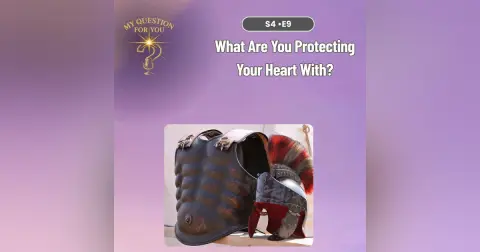



Season 4 of My Question for You: Wisdom for Your Walk continues with SUITED UP, our series taking a fresh look at the armor of God—not simply what each piece represents, but what it actually looks like to wear it.
This week, we’re moving to the breastplate of righteousness.
A breastplate protected something vital. So why does Paul connect that protection to righteousness? And what exactly are we putting on?
It’s easy to think of righteousness as getting things right—living well, making good choices and obeying God. But if our protection depends on our performance, what happens on the days when we get it wrong?
In this episode, we’re looking at the difference between trying to build our own protection and learning to stand in the righteousness Christ has already provided. We’ll also explore what wearing the breastplate looks like when we fail, face correction, or feel the need to prove that we’re still okay.
Because your record was never your breastplate.
So this week’s question is:
What are you protecting your heart with?
📖 Scripture: Ephesians 6:10–18; 2 Corinthians 5:21; Philippians 3:8–9
🎧 New episodes every week. Subscribe so you never miss a question.
If this one hit close to home, share it with someone who might need it too.
🔗 Take the next step at myquestionforyou.com — and join the free weekly email, A Quiet Invitation, for a short word of encouragement each week. Or just visit: https://preview.mailerlite.io/forms/1717098/165207819752047949/share
✨ Encouragement for your spirit. Wisdom for your walk.
Have you ever messed up and immediately started building your defense? You know what I mean. Maybe you said something you shouldn't have said, or you handled something badly. You knew better, but you did it anyway. And almost immediately you start trying to make yourself feel better about yourself. You start saying things like, okay, but I'm not a bad person, or I've been doing really well lately, or maybe things like, at least I didn't do what they did. We start reaching for something that will reassure us that we're still okay. And I wonder if that tells us something. Because when Paul describes the armor of God, the second piece he tells us to put in place protects one of the most vulnerable areas of the body, the breastplate. And what does he connect it to? Righteousness. So today, I want to know why. Why would righteousness be something we need to wear for protection? And maybe even more importantly, what happens when we try to protect ourselves with the wrong thing? Hey everyone, I'm Melissa, and this is My Question for You. We're continuing our series that I've been calling Suit It Up, where we're taking a fresh look at the armor of God. We already know the pieces, but what I want to understand is why Paul chose those particular images and what it actually looks like to wear the armor in our everyday life. So last week we started with the belt of truth. Before we move, secure the belt. Now Paul moves from the waist to the chest. So here's my question for you today. What are you protecting your heart with? Okay, let's go back to Ephesians six, verse fourteen. Paul writes Stand firm then, with the belt of truth buckled around your waist with the breastplate of righteousness in place. Now, this one is easier to picture than the belt. A breastplate protected the torso. That's an area that contains your vital organs. During a time of war, a blow there could have been devastating. So this wasn't decorative armor. It covered something that needed protection. And Paul says the thing occupying that position in the armor of God is righteousness. And that's where I want to slow down. Because if Paul is telling me to put on righteousness like a breastplate, I need to understand what righteousness he's talking about. Otherwise, I could end up trying to protect myself with something that was never strong enough to protect me in the first place. When we hear the word righteousness, I think it's easy to immediately think about behavior, to think about doing right, living right, obeying God, and those things absolutely matter. God calls us to lives that reflect Him. But if I think the breastplate is simply my ability to behave well enough, then I have a problem. Because I don't always get it right. I don't think any of us do. So what happens to my armor on the day I fail? Does the breastplate come off? Am I protected when I've had a really good spiritual week, but exposed when I haven't? That would make my protection dependent on my performance. And Scripture gives us a much stronger place to stand. Second Corinthians 521 says, God made him who had no sin to be sinned for us, so that in him we might become the righteousness of God. Our right standing with God begins with what Christ has done, not with our ability to get everything right. That changes the breastplate for me. Because now I'm not standing there trying to build my own protection. God has already provided it, just like the rest of the armor. And yet, I think we still try to make our own protection sometimes. We use our good behavior, spiritual habits, how much we serve, how much better we're doing than we used to, and none of those things are bad. The problem comes when we start using them as evidence that we're worthy of God's acceptance. Because eventually we're going to have a day when our record doesn't look so good. And that's usually when the accusations start getting louder. We start thinking to ourselves, look at you, you knew better. After everything God has done for you, you're still doing this. Or who do you think you are to encourage someone else when you can't even get your own life straight? We've talked about that voice before, back in our last series, Behind Enemy Lines, we talked about the difference between conviction and accusation. Conviction can point to something real that needs to change. But accusation takes what you did and turns it into a verdict about who you are. And look at where the breastplate comes in. When accusation strikes at something vital, like your identity, your standing with God, your confidence to come back to Him when you've done something wrong, you don't have to defend yourself with your own record because your record was never your breastplate. Christ is the reason you can stand righteous before God. That's your protection. Now, let me be careful here because we could stop right there and misunderstand the whole thing. If Christ is my righteousness, does that mean it doesn't matter how I live? Of course it matters, but the order matters too. We don't live righteously so that God will make us righteous. We learn to live differently because of what God has already done in us through Jesus Christ. Philippians 3 is really helpful here. Paul talks about not having a righteousness of his own that comes from the law, but one that comes through faith in Christ. That was a huge shift for Paul. This was a man who knew how to build a spiritual resume. He had credentials, he had discipline, religious accomplishment, and he came to understand that none of it could do what Christ had done for him. So righteous living isn't me constructing a breastplate one good decision at a time. I'm learning to live from the protection that God has already given me, and that difference matters. Okay, so let's bring this out of theology and into our normal everyday life. What does it actually look like to put on the breastplate of righteousness? Suppose you mess up. You knew you were wrong, but wearing the breastplate doesn't mean pretending you didn't do anything wrong. Righteousness doesn't protect you from accountability. It protects you from believing that your failure has changed your standing with God and how God sees you and how God loves you. So you can confess it. You can apologize, make something right if it needs to be made right. Allow God to correct you without running away from Him. That's very different from trying to defend yourself. And I think this is where the armor starts to become real. Because without that protection, failure can make us high. We start to pull away from prayer because we feel unworthy, or we avoid scripture because we already feel guilty. Sometimes we can even distance ourselves from God until we feel like we've done enough good things to come back into his presence. But think about what we're doing when we do that. When we try to repair our own breastplate, we're trying to become good enough to approach the one who already made a way for us to approach him. This may be one of the most practical ways to know whether we're actually wearing this piece of armor. Think about the question: what do you do when you get it wrong? Do you hide? Do you defend yourself? Do you start comparing your failure to someone else's? Or can you bring the truth of what you did directly to God because your relationship with Him isn't resting on your ability to be perfect? That's protection. Not protection from consequences or protection from correction, but protection from allowing failure to become your identity. And there's another side to it. When I know I don't have to earn my standing with God, I'm actually freer to admit when I'm wrong. I don't have to protect an image of myself as the person who always gets it right. I can say, God, I was wrong. And then deal with what needs to change. Because I don't think that's weakness. That's what it looks like to be secure. So now the breastplate image starts making even more sense. Because some attacks don't just come after our behavior, they go after who we believe we are. One failure becomes I'm a failure. One bad decision becomes the thought of I'll never change. A season when you're struggling becomes, God must be disappointed in me. If all of these things are going wrong in my life, then there must be something that I've done to fall out of God's grace and his favor and his mercy. And if I accept those conclusions, they can affect the way I approach God, the way I see myself, and even whether I believe I'm still useful to God. And that's a very vulnerable place to be. So Paul says, put the breastplate in place. Remember where your righteousness comes from, and then live like someone who has received it. We're not covering our faults with excuses. We're covering something vital with what God has provided to us. And there's something I don't want us to miss as we move through this series. Paul calls this the armor of God. Not Melissa's armor, not your armor, but God's armor. The strength is his, the truth is his. The righteousness comes from God. We're not being told to walk onto a battlefield and somehow manufacture everything we need once we get there. God provides the armor we need. Our responsibility is to put it on. And when it comes to this breastplate, that means I stop trying to protect myself with how well I've performed. I receive what God has done for me. And then I allow that truth to shape the way I live. That's very different from trying to prove myself worthy of protection. So let me ask you again, what are you protecting your heart with? And maybe the easiest way to answer that is to pay attention to what you reach for when you fail. If you immediately start defending yourself, proving yourself, or comparing yourself, notice that. You may be reaching for your own righteousness. Instead, come back to what God has already provided. Tell the truth about what happened. Receive his correction where you need it and make the change. But don't confuse I did something wrong with I am no longer right with God. Because those are not the same thing. The breastplate allows you to deal honestly with one without surrendering to the other. So this week, I want you to pay attention to the moments when you feel the need to prove that you're still okay, especially after you get something wrong. Instead of building a defense, ask yourself, what am I trying to protect myself with right now? Am I trying to protect myself with my performance, my excuses, or someone else's behavior? Or what Christ has already done for me? Am I protecting myself with the right things? I own what needs to be owned. Let God correct what needs to change and keep walking. Because wearing the breastplate of righteousness doesn't mean you'll never get it wrong. It means your protection was never built on getting everything right. Next week, we're gonna move on down to the feet. Paul says, with your feet fitted with the readiness that comes from the gospel of peace. And that one already starts to raise some questions. Why does peace go on your feet? And why does Paul connect peace with being ready to move? We're gonna stay with that picture and we're gonna find out. It protects us from building our relationship with God on something as unstable as our own performance. So don't spend time this week trying to make your own armor. God has already provided what you need. Put it on, and then live from what you've been given. Until next time, keep asking, keep listening, and remember, you don't have to prove what God has already provided. Before you go, if today's question stayed with you, I'd love to keep the conversation going. Each week, I send a short email called This Week's Question a Quiet Invitation, and it's a simple reflection to help you stay grounded, to pay attention, to dive deeper into God's Word, and to walk with God throughout your week. You can sign up at myquestion for you.com, bringing you encouragement for your spirit and wisdom for your walk.