
What’s Holding You Together?
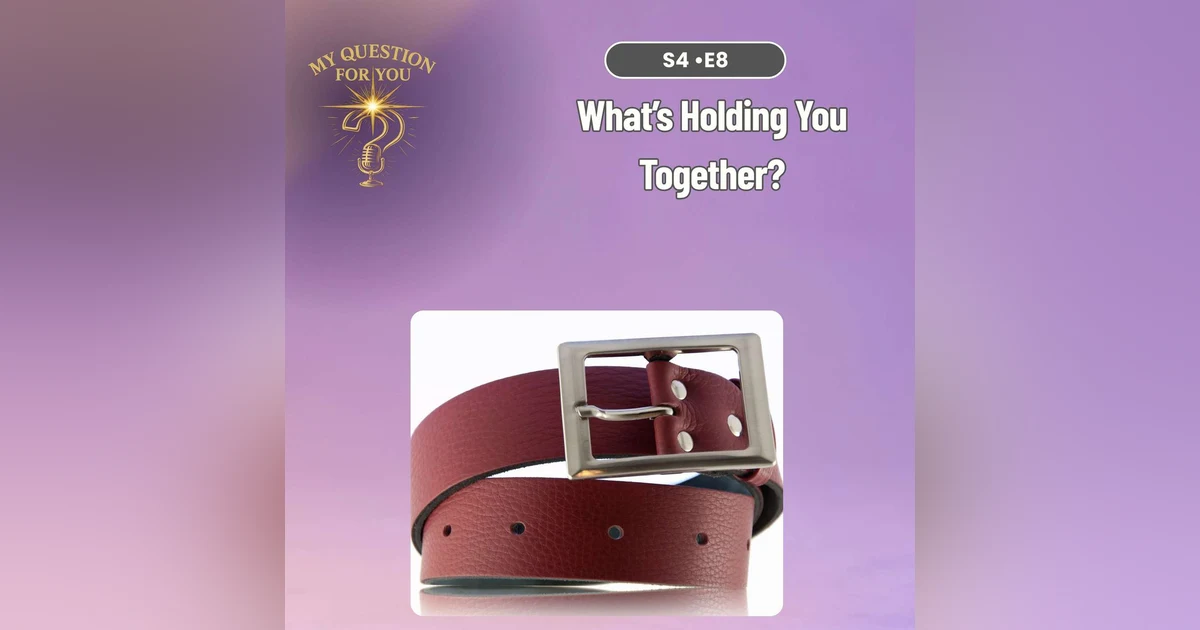


Season 4 of My Question for You: Wisdom for Your Walk continues with SUITED UP, our series taking a fresh look at the armor of God—not simply what each piece represents, but what it actually looks like to wear it.
This week, we’re starting with the first piece Paul names: the belt of truth.
Why does truth come first? And why would Paul compare it to something a soldier secured before he moved?
Because when life changes, we can quickly move from what happened to deciding what it means about God—and those aren’t always the same thing.
In this episode, we’ll look at how truth keeps us grounded when circumstances leave us with more questions than answers, and what it practically looks like to put on the belt of truth before we react, assume or move forward.
So this week’s question is:
What’s holding you together?
📖 Scripture: Ephesians 6:10–18; John 17:17
🎧 New episodes every week. Subscribe so you never miss a question.
If this one hit close to home, share it with someone who might need it too.
🔗 Take the next step at myquestionforyou.com — and join the free weekly email, A Quiet Invitation, for a short word of encouragement each week. Or just visit: https://preview.mailerlite.io/forms/1717098/165207819752047949/share
✨ Encouragement for your spirit. Wisdom for your walk.
Have you ever been completely sure about something? Until something happened. You knew God was faithful. You trusted him, you believed what his word said, but then life changed. Something you prayed for didn't happen. A plan fell apart, or maybe you found yourself in a situation you didn't expect, and suddenly what you thought you knew about God became harder to hold on to. So here's what I want you to notice. God didn't change. Your circumstances did. But if we're not careful, a change in our circumstances can start changing what we believe about God. And that brings us to the first piece of armor that Paul names in Ephesians 6, the belt of truth. Now, of all the pieces he could have started with, why a belt? And why truth? Hey guys, I'm Melissa, and this is my question for you. So last week we started our new series, which I'm calling Suit Up, with a very simple idea. Knowing the armor of God isn't the same as wearing it. Many of us already know the pieces. We can name them. We know what they represent. But in this series, I want to take a closer look at why Paul connects each truth to a particular piece of armor and then bring it into real life. What does it actually look like to wear the armor? So today we start with the belt of truth. And here's my question for you. What's holding you together? Okay, let's jump back into Ephesians six. Paul has already told us to be strong in the Lord and in his mighty power. He's told us to put on the full armor of God so that we can stand. Then in verse fourteen he begins with Stand firm then, with the belt of truth buckled around your waist. A belt may seem like an odd place to start, but the shield sounds more important and the sword definitely sounded more impressive than a belt. But a soldier needed to be able to move without loose clothing getting in the way. The belt helped secure things around his waist, and it also supported the equipment that he carried. So in other words, before the soldier moved into action, he made sure things were in place. Paul connects that preparation to truth. That changes the way I see this piece of armor. Truth isn't only something I use to identify a lie. Truth is something I secure before I start to move, before I react, before I decide what something means, before I allow one difficult moment to change what I believe about God. And suddenly the belt of truth feels a lot more practical. Because, okay, we move fast. Life is always constantly moving around us. Something happens and almost immediately we start deciding what it means. You've been praying about something for months and nothing has changed. That's what happened. But somewhere along the way, you start thinking, God must not be listening to me. Now we've moved from what happened to what we believe it means. Or a door closes that you were convinced was going to open. The door closed is real, but then comes our conclusion. We start thinking maybe God isn't leading me anymore. And this is where I think the belt gives us such a useful picture. Before you move from the circumstance to the conclusion, secure the truth. Slow down long enough to separate what actually happened from what you've decided it means about God. Because those are not always the same thing. So what does that actually look like? Let's say you get news you weren't expecting. Your first reaction may be disappointment, fear, anger, or it could just be confusion. And that's human to feel that way. Wearing the belt of truth doesn't mean you shut those feelings down and start quoting scripture until you don't feel them anymore. It means you don't allow the feeling to become your final authority. You can say, I'm disappointed and I don't know what God is doing here. And that would be honest. But then you can stop before adding something God never said. You can start to think, so he must have forgotten me. I must have forgotten everything that I've learned, that I've read, I got something wrong, or I can't trust God. That's where the belt comes in, because that's where the belt of truth matters. You secure what you know before you build a story around what you don't know. That's practical, and that's the thing we need to take away from this and remember. And honestly, I think that may be one of the clearest ways that we can begin wearing this particular piece of armor. Now, I want to make sure we don't misunderstand this because that was a lot and thinking about the belt of truth in this piece of armor a little bit differently than maybe we learned it growing up or what we heard in Bible study. So I'm asking you to kind of bend your what you thought you knew about this piece of armor a little bit. So for that reason, let's just slow it down. Truth doesn't require you to deny reality. If something hurts, it hurts. If you're afraid, it's okay to acknowledge that. You can be confused about what God is doing and still trust him. We actually saw a beautiful picture of this at the end of our last series behind enemy lines. You'll remember Elisha's servant walked outside and saw an enemy army surrounding the city. And he wasn't wrong. The army was really there. And when God opened his eyes and allowed him to see the heavenly army surrounding them, the first army didn't just suddenly disappear. What changed was that the servant could now see more of the truth. And that matters here because sometimes what we see is true, but it just isn't all that's true. The situation may be difficult, and God can still be present. You may not know what comes next or how things turn out, but God can still be trustworthy. Truth doesn't erase the circumstance, it keeps the circumstance in its proper place. Now, that raises an important question. If I'm supposed to secure the truth before I move, how do I know what's actually true? Because I can convince myself of a lot of things. We all can. Our emotions are real, but they change. Our perspective is limited. We make assumptions, we misunderstand things, we learn new information and realize we had the situation completely wrong all along. So we need a reference point outside of ourselves. In John chapter 17, verse 17, Jesus is praying to the Father and he says, Sanctify them by the truth. Your word is truth. Take that in because that matters. Because when Paul tells us to put on truth, we aren't being told to secure ourselves to whatever feels true in the moment. God has given us his word. Now, that doesn't mean there's a Bible verse that explains every circumstance in your life because there isn't. We know that. Scripture may not tell you why the opportunity fell through or when the situation will change, but scripture gives you something just as important. It tells you who God is. So when the situation changes, you have a reference point that doesn't have to change with it. And I think this is where wearing the belt can get a little difficult because sometimes we aren't really looking for the truth. We're looking for an answer. We want to know why. We want to know what God is doing, what's happening in the background behind the scenes where we can't see. And we want to know how this turns out, right? We want to know what how long is it going to take? When am I finally going to see and realize the blessing or the answer that I've been hoping and praying for? And sometimes we just don't know yet. So, what do you do in that space? We secure what God has already made clear. You may not know why the door closed, but you don't have to invent an explanation for it. And you may not know what God is doing. You may not always know what he's up to. It may not be right in front of your face, but you don't have to fill that empty space with fear, right? You may not know how things are going to turn out, but you don't have to wait for the outcome before deciding whether God is trustworthy. This is the thought that really challenged me. I was thinking, if I can only trust God when I understand what he's doing, then my understanding is what I'm actually trusting and not God. I'm leaning on myself more than I should. And I don't want my understanding carrying that much weight because there are going to be things that I just don't understand. So I need truth that can hold steady even when I don't have the answer. That's what I'm starting to see differently about this belt. It's not just knowing what's true, it's about being secured by what's true. And now I understand a little better why Paul may begin here. Think about where we're going in this series, in this suited up series that we've started. We're going to talk about righteousness. We're going to talk about peace, faith, salvation, the word of God. But how do I raise the shield of faith if I'm no longer sure God can be trusted? How do I walk in peace if my circumstances are deciding what I believe? How do I use the word of God if I've allowed my own interpretation of what's happening to carry more authority than what God has actually said? Truth affects the way we use everything else. So the belt may not be the most dramatic piece of armor, but I don't think Paul wastes the first position. He gives us a picture of a soldier getting ready to stand. And the first thing he tells us to put in place is truth. Secure this, then move. So let me ask you again, what's holding you together? Think about one situation in your life that feels uncertain right now. Just one. What actually happened? And what have you decided it means? Those two questions may give you very different answers. Maybe the truth is that you don't know what comes next. Okay, that's fine. You don't know. But don't add to that uncertainty something God never said. Go back to your reference point. What has God actually revealed about himself? What does his word say? What do you know to be true, even though there are still things you don't understand? That's where you start. That's what it looks like to reach for this piece of armor and actually put it on. So this week, when something unsettles you, I want you to remember one simple thing. Before you move, secure the truth. Before you decide what the situation means, pause and just ask yourself what actually happened? What am I assuming because it happened? And what do I know to be true about God? You may still have questions when you're finished, and that's okay. But the belt of truth doesn't promise you an explanation, it gives you something secure enough to stand in while you wait. Next week, we move on to the breastplate of righteousness, and we're gonna do the same thing. We're not stopping at the breastplate represents righteousness. We're gonna ask why. A breastplate protected vital parts of a soldier's body. So why does Paul connect that protection to righteousness? And when he tells us to put it on, what exactly are we putting on? That's where we're going next. So, friends, what's holding you together? The belt may not be the piece of armor that gets the most attention, but maybe that's exactly why we needed to slow down and look at it again. Because before the soldier moves, something has to hold everything in place. Paul says, truth. So when life changes, don't rush to let the circumstances tell you what it means about God. Secure what you know. Then take the next step. Until next time, keep asking, keep listening, and remember, before you move, secure the truth. Before you go, if today's question stayed with you, I'd love to keep the conversation going. Each week, I send a short email called This Week's Question a Quiet Invitation, and it's a simple reflection to help you stay grounded, to pay attention, to dive deeper into God's Word, and to walk with God throughout your week. You can sign up at myquestion for you dot com, bringing you encouragement for your spirit and wisdom for your walk.